> cat campus-navigator.md
campus navigator
A campus routing service that finds the best building entrance for walking or wheelchair access.
1 / 4
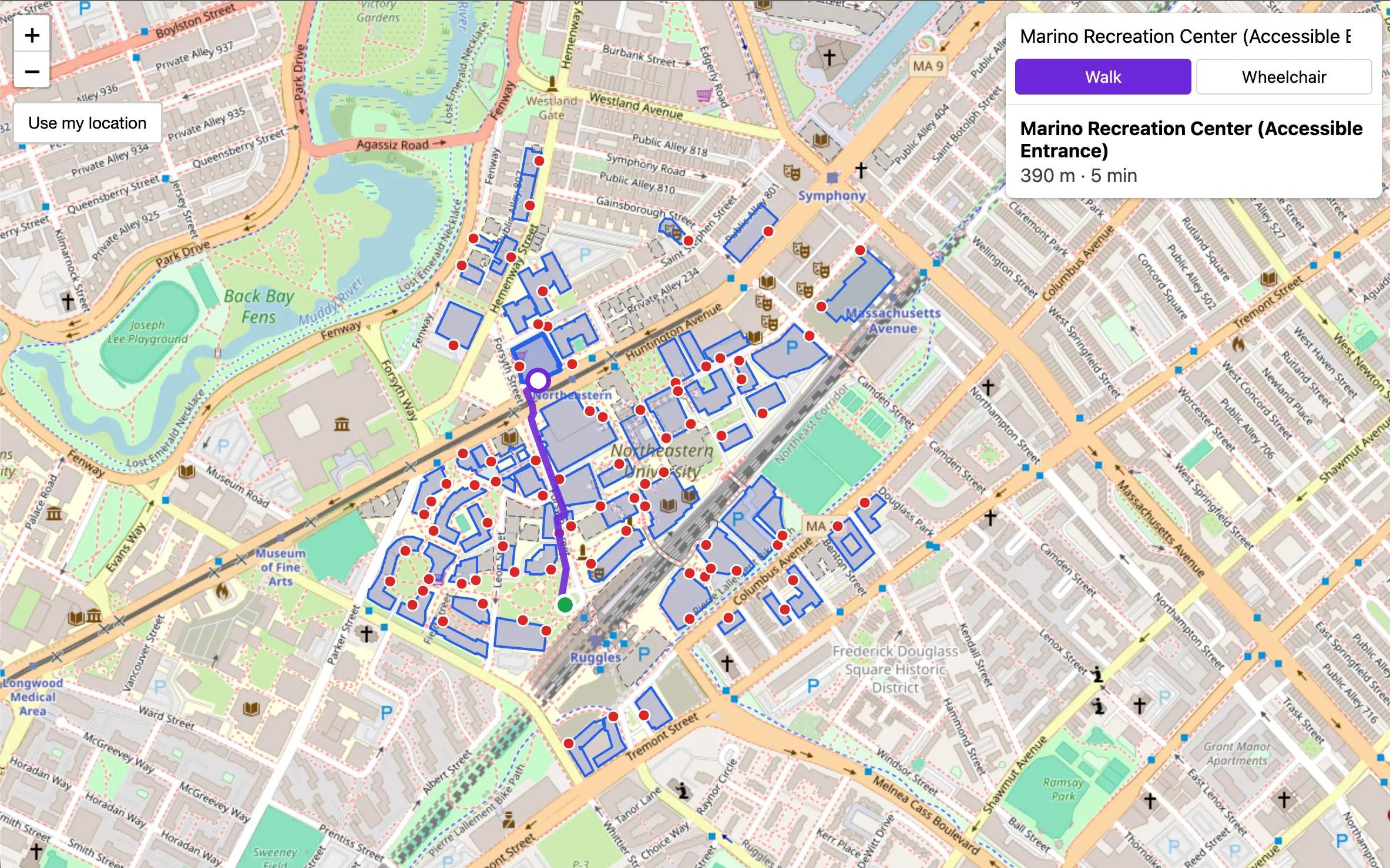
a walking route across campus to a specific door: 390 m · 5 min.
> about
Google Maps gets you to a building, but a building can have five or more doors and only some of them are accessible. Campus Navigator routes you to the best entrance, for walking or for wheelchair access. The first campus is Northeastern: 104 buildings, 82 mapped entrances, and a 2,060-node, 2,727-edge path graph.
what i built
- Data pipeline — offline Python scripts that merge ArcGIS building and entrance exports with OpenStreetMap sidewalks (via OSMnx), fix mismatched building IDs, and snap each entrance onto the nearest path by splitting that edge. The scripts are idempotent, so re-running them never leaves stale data.
- Strict loader — reads the campus CSVs into the graph and refuses to start on bad data (duplicate edges, broken polygons, entrances without a building) instead of skipping it with a warning. It’s multi-campus from day one: nothing outside data-prep is hard-coded to Northeastern.
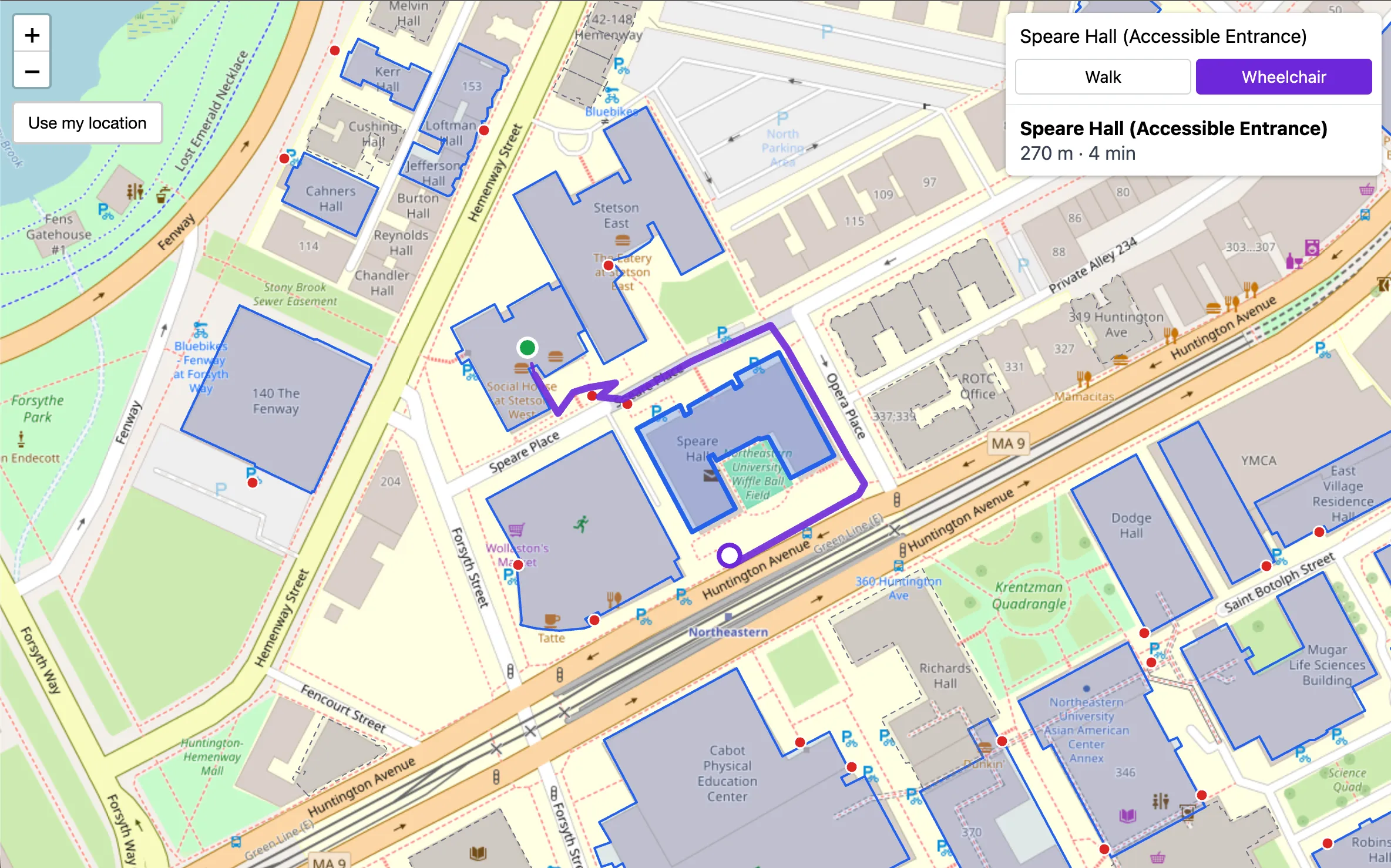
- Routing engine — one Dijkstra with pluggable cost functions and multi-target search, so “nearest of this building’s doors” is a single search and wheelchair routing is just a different cost. It returns an explicit “no path” result for disconnected areas instead of crashing or faking a route.
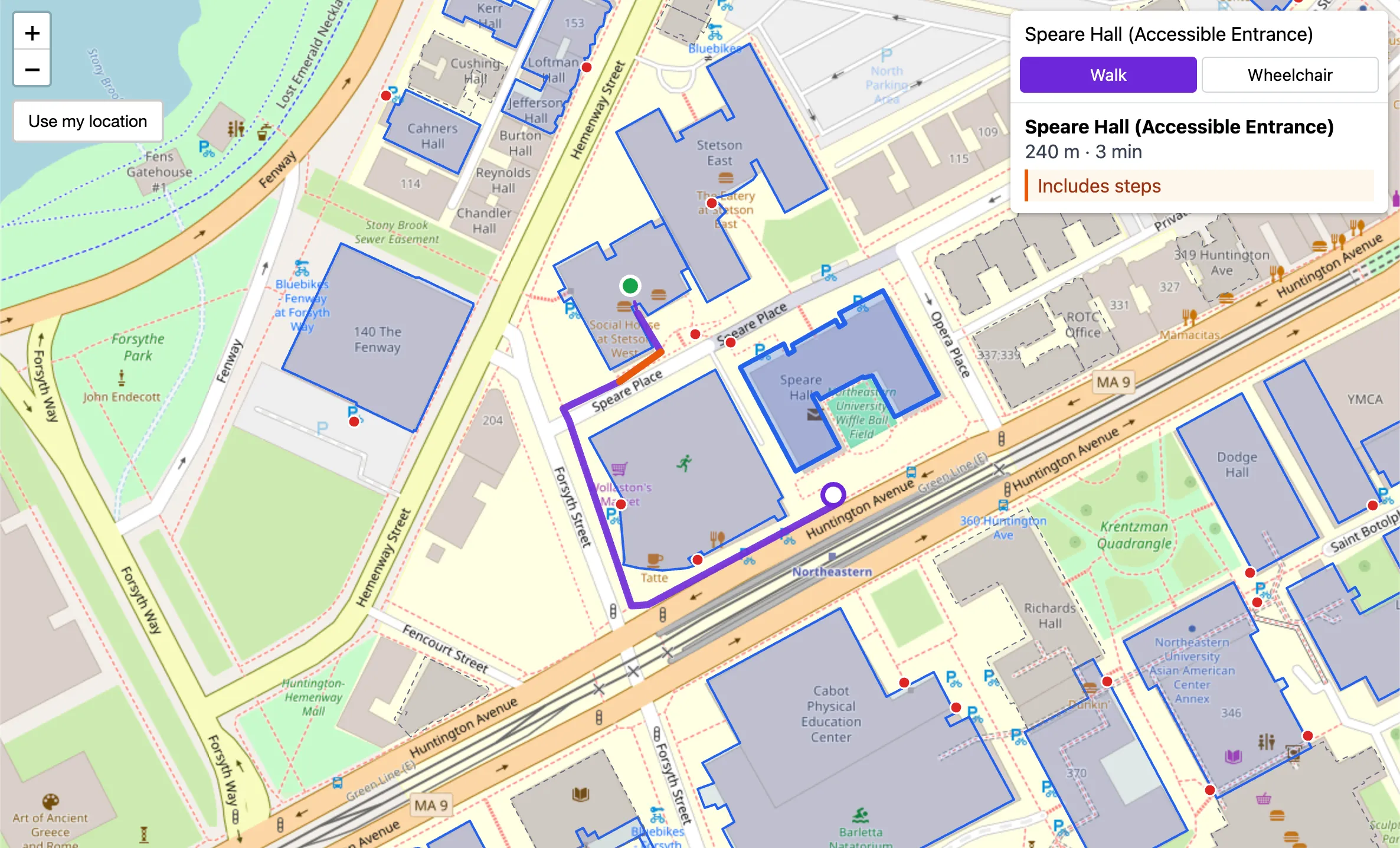
- Query layer + REST API — FastAPI endpoints for search, snapping your GPS position onto the nearest path segment, and routing. Walking routes flag any segment not known to be accessible, which is how the “includes steps” warning works.
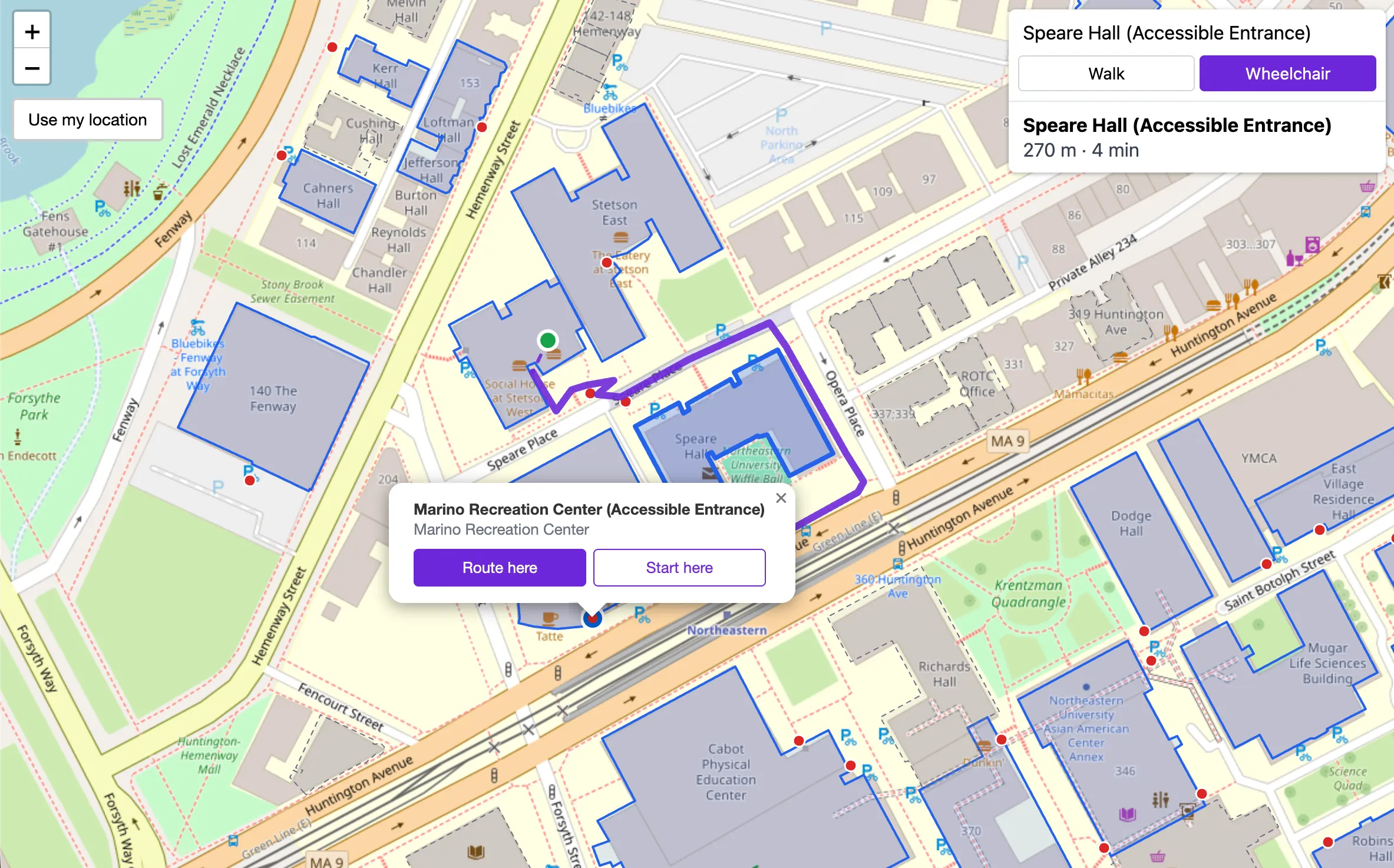
- Map frontend — Leaflet and plain JavaScript with no build step: building outlines, door markers, search, “use my location”, a walk / wheelchair toggle, and route here / start here from any door.
- Tests — 291 pytest tests across the loader, routing, query and API layers, plus JS tests for the frontend helpers.